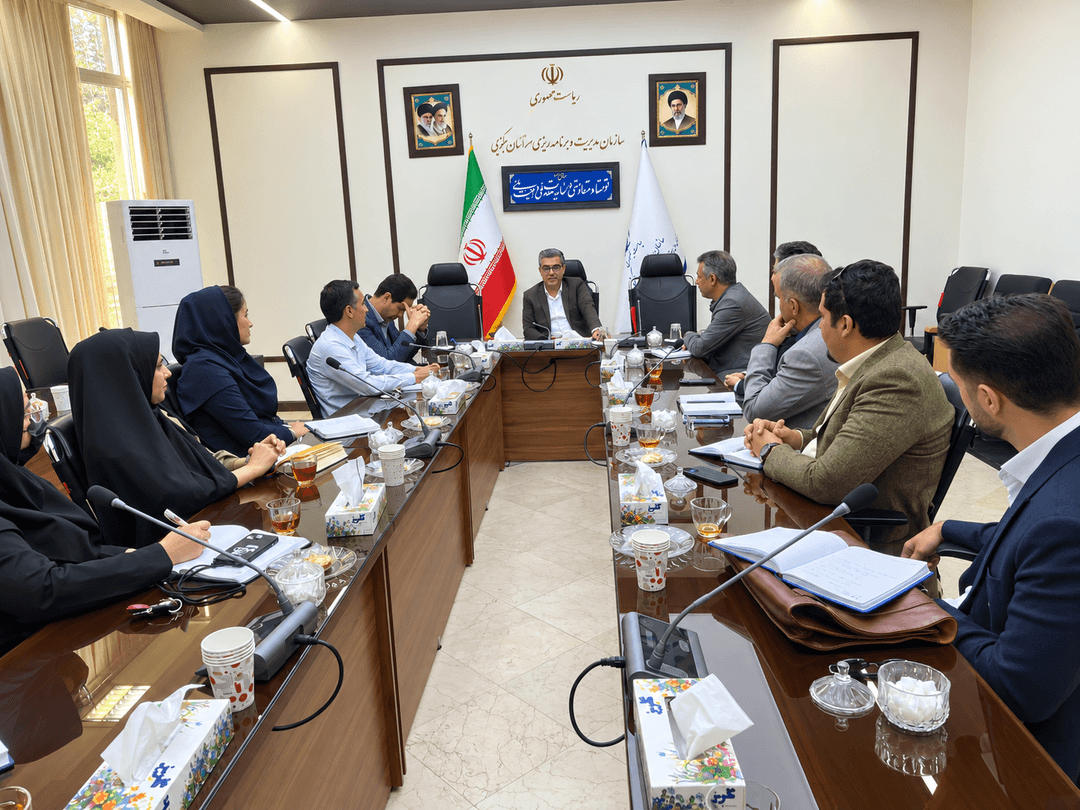
The 26th meeting of the Deputy Managers Council of Mashhad Electricity Distribution Company was held at the Observatory of Mashhad Municipality’s Innovation Factory, focusing on reviewing the studies conducted for the Resilience Atlas and Hardening of the Electricity Distribution Network. The meeting was organized by the Deputy of Planning and Engineering and attended by the CEO, Deputy CEO, department heads, and council members.
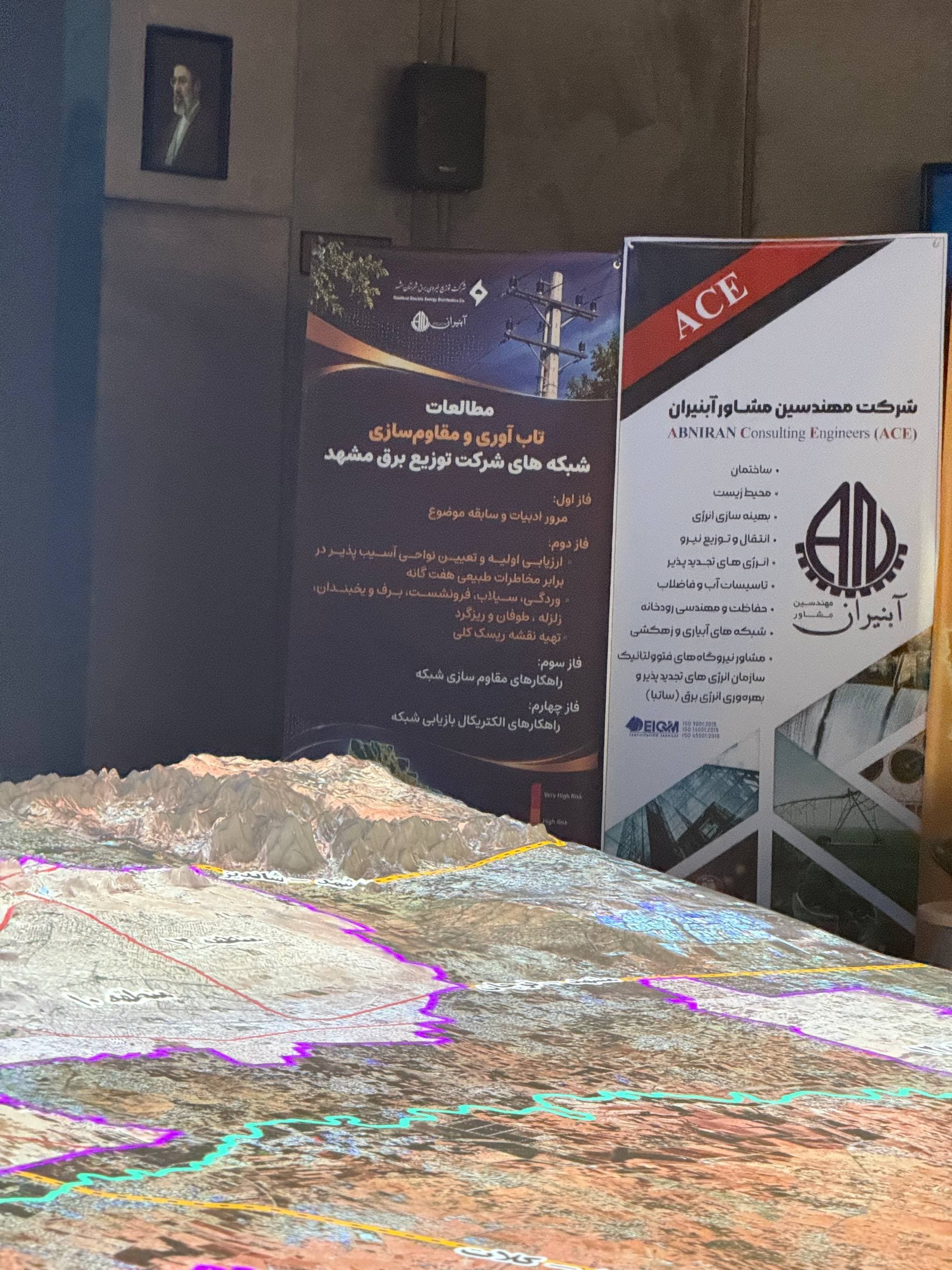
According to the Public Relations Office of Mashhad Electricity Distribution Company, Abniran Consulting Engineers, as the consulting firm responsible for implementing the project, presented a report on the progress of the resilience studies of Mashhad’s electricity distribution network. The presentation covered the latest activities undertaken to identify natural hazards, assess vulnerable areas, and develop network hardening strategies.
These studies are being conducted in accordance with the guidelines for preparing the Resilience Atlas and Network Hardening Plans, as well as the resolutions of the Resilience Working Group of Tavanir. Under these directives, electricity distribution companies are required to conduct specialized studies in this field.
During the meeting, Amirreza Rajabi, CEO of Mashhad Electricity Distribution Company, emphasized the importance of network resilience and hardening, stating:
"The first phase of the studies has been completed in cooperation with a knowledge-based company and through the efforts of the Deputy of Planning and Engineering. In this phase, natural hazards affecting the company's service area were investigated, and the corresponding hazard maps were prepared."
He added that, in the subsequent phases, hazard maps would be overlaid with the existing electricity distribution network. Based on the results of this assessment, practical solutions would be developed to enhance network resilience and strengthen its infrastructure.
Rajabi emphasized that resilience is one of the key pillars of the company's vision to become a "Smart, Lean, and Resilient Organization." He noted that, alongside addressing day-to-day challenges and responding to public needs, the company must remain attentive to technological developments and the capabilities of knowledge-based enterprises, as technologies are advancing rapidly and the electricity industry must evolve accordingly.
In another part of the meeting, Seyed Mehdi Mirzaei, Deputy of Planning and Engineering at Mashhad Electricity Distribution Company, explained the implementation process of the network resilience studies.
He stated that the project was developed and supervised by the Engineering Affairs Department, with coordination and follow-up by the Engineering Studies Group of the Deputy of Planning and Engineering. Following the consultant selection process, Abniran Consulting Engineers was selected through a competitive tender, and implementation of the studies commenced in November of the previous year.
He explained that the project consists of several phases. In Phase One, the concepts, definitions, and technical foundations of resilience were established. In Phase Two, vulnerable areas of the electricity distribution network were identified and assessed against seven natural hazards:
Corrosion
Flooding
Land subsidence
Snowfall and freezing conditions
Earthquakes
Storms
Dust storms
Mirzaei further stated that, upon completion of Phase Two, integrated multi-hazard zonation maps and an overall risk map of the service area covered by Mashhad Electricity Distribution Company were prepared.
He added that Phases Three and Four are currently focused on developing civil and structural hardening measures, as well as electrical engineering solutions, based on the results of the hazard zonation and risk assessment.
Highlighting the strategic importance of resilience in the electricity industry, the Deputy of Planning and Engineering noted that, following completion of the studies, a specialized training course would also be organized to transfer technical knowledge and familiarize the company's personnel with the consultant's findings and proposed solutions.
Mirzaei also expressed his appreciation to Navid Aghli, Network Automation and Protection Expert at the Engineering Affairs Department, for his efforts in coordinating and following up on the project implementation and organizing the meeting.
Dr. Abolfazl Akbarpour, CEO of Abniran Consulting Engineers, also presented an overview of the study findings, stating that meteorological data and natural hazards affecting the city of Mashhad and its surrounding service area had been investigated. Relevant geospatial information layers were subsequently processed, developed, and presented.
He added that these datasets provide the basis for identifying and anticipating potential hazards threatening the electricity distribution network. They will also serve as a foundation for planning, design, and operation, as well as developing electrical and non-electrical mitigation measures to enhance network resilience in the subsequent phases of the project.
It is worth noting that the meeting was held in two sessions. In the first session, managers of the company's operational and network operation and maintenance (O&M) departments were briefed on the study methodology and findings. In the second session, the project's technical report was presented to the Deputy Managers Council, where its various technical and strategic aspects were discussed and reviewed.